Saving · 🇮🇳 India
Rent vs Buy a House in India: The Honest Math for 2026
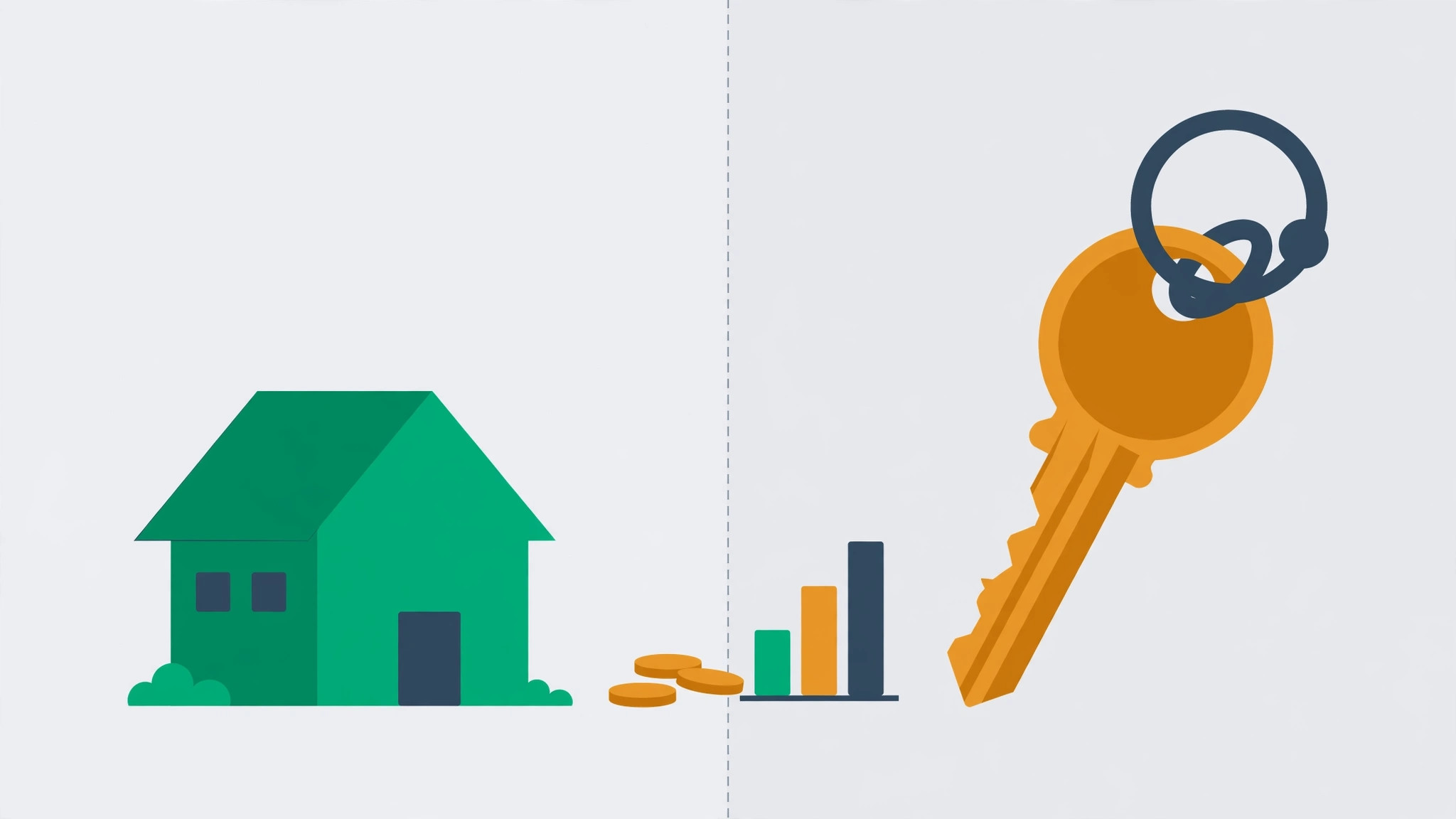
"Rent pe paise waste ho rahe hain." If you're a salaried Indian in your late 20s or 30s, you've heard this sentence from at least three relatives, usually at a family dinner, usually while you're mid-bite. And it feels true — every month's rent vanishes while a homeowner's EMI builds an asset. But feelings aren't math. When you actually run the numbers — including the costs buyers conveniently forget — renting wins more often than Indian family wisdom admits. Let me show you the real calculation, and more importantly, when each choice is right.
First, let's reframe the question. It's not "rent vs buy" — it's "where does my money work harder?" A home purchase ties up a huge down payment plus two decades of EMIs. Renting frees that capital to be invested elsewhere. The honest comparison isn't rent vs EMI — it's total cost of owning vs total cost of renting + investing the difference. Most dinner-table arguments skip that second half entirely.
Prices, interest rates, and tax rules in this guide were illustrative as of October 2026 and vary by city — verify current figures with official sources before deciding.
The ₹1 Crore Example, Done Properly
Let's take a realistic metro scenario: a flat worth ₹1 crore today. You have ₹20 lakh for a down payment.
Option A: Buy
- Down payment: ₹20 lakh (20%)
- Stamp duty + registration: ~₹6–7 lakh (5–7% depending on state — this money is just gone)
- Loan: ₹80 lakh at ~9% for 20 years → EMI roughly ₹72,000/month
- Total interest paid over 20 years: roughly ₹93 lakh — yes, you pay more in interest than the loan itself
- Maintenance + property tax + society charges: roughly ₹5,000–8,000/month, rising with inflation
- One-time furnishing/interiors: easily ₹3–5 lakh for a basic setup
Real upfront cash out of pocket: about ₹30 lakh (down payment + stamp duty + interiors), not ₹20 lakh. Then ₹72,000/month EMI plus ~₹6,000/month maintenance for 20 years. Total paid over 20 years: roughly ₹2.15 crore — for a flat bought at ₹1 crore.
Option B: Rent an equivalent flat + invest the difference
- Rent: ~₹25,000–30,000/month for a ₹1 crore flat (Indian rental yields are typically 2.5–3.5%)
- Invest the upfront ₹30 lakh in a diversified equity portfolio
- Invest the monthly difference (₹72,000 EMI minus ₹28,000 rent ≈ ₹44,000/month) via SIP
At a 10% long-term return (historical equity average, not a guarantee — markets fall too), that ₹30 lakh lump sum + ₹44,000/month SIP grows to roughly ₹5.2 crore in 20 years. Even at a conservative 8%, it's around ₹3.9 crore. Meanwhile the flat, appreciating at a generous 6% a year, is worth about ₹3.2 crore — before subtracting the ₹1.15 crore extra you paid over its price in interest, taxes, and maintenance.
I'll say it plainly: on pure math, in most Indian metros today, renting + investing beats buying. The numbers aren't close. But — and this is a big but — pure math isn't the whole story.
What the Math Misses (Why People Still Buy)
If renting wins on spreadsheets, why does every Indian family push buying? Because a home isn't just a financial asset. The non-financial returns are real:
- Forced savings. An EMI is a savings plan with a penalty for skipping. Plenty of disciplined-looking homeowners would never have invested that ₹44,000/month difference — they'd have spent it. Be brutally honest with yourself about which type you are.
- Stability and control. No landlord selling the flat, no 11-month agreement anxiety, no moving your kid's school because the owner wants the flat back. You can drill a hole in any wall you like.
- Leverage on an appreciating asset. With 20% down, a 6% price rise is a 30% return on your equity (minus costs). Leverage cuts both ways, but in rising markets it's powerful.
- Retirement security. A paid-off home at 55 means your biggest living cost disappears exactly when income stops. Renters need a bigger corpus to cover rent forever.
- Tax benefits. Home loan principal (80C) + interest (up to ₹2 lakh under 24b) deductions help — though only in the old regime.
None of these show up in the spreadsheet, and dismissing them as "emotional" is its own kind of innumeracy. Money serves life, not the reverse.
When Buying Is the Right Call
Buy when most of these are true:
- You'll stay in the city (and ideally the flat) for 10+ years — transaction costs need time to amortise.
- Your job/income is stable enough for a 15–20 year commitment.
- The EMI is under ~35–40% of your take-home pay, with a 6-month emergency fund intact after the down payment.
- You've found a property at a fair price in a location with genuine demand (not a "pre-launch offer" in the middle of nowhere).
- You're buying to live in it — investment flats have a much tougher bar to clear.
When Renting Is the Smarter Move
- Your career might move you cities in the next 5–7 years — selling costs ~5–8% of the price each time you churn.
- The EMI would stretch you past 45–50% of income, leaving no room to invest or handle shocks. (Our 50-30-20 guide shows how to keep housing inside the needs bucket.)
- Rental yields in your area are low (2.5–3.5%) — the math gap is widest here.
- You're young and your capital compounds harder in equity than in concrete — ₹30 lakh at 10% for 20 years is life-changing money.
- You're honest that the "invest the difference" part will actually happen (automate the SIP on salary day, or this whole argument collapses).
Frequently Asked Questions
Is rent really "money down the drain"?
No — rent buys you housing, flexibility, and freed-up capital, just like EMIs buy you housing plus interest payments to a bank. In the ₹1 crore example above, roughly ₹93 lakh of the buyer's payments is interest — that's also "money down the drain," just dressed up as ownership.
What about property appreciation — won't the flat double?
Indian metro property has appreciated roughly 5–8% annually over long periods in prime areas — but that's before costs, and many peripheral areas have seen near-zero real growth for a decade. Also note: you don't get the full appreciation; interest, stamp duty, maintenance, and selling costs eat a large share. Compare net returns, not sticker prices.
Should I buy a flat as an investment?
Usually a weak investment in India today: 2.5–3.5% rental yields minus maintenance, property tax, vacancy periods, and illiquidity. Equity or even debt funds have historically beaten it with far less hassle. Buy property to live in it; invest elsewhere for returns.
How much home loan can I afford?
The standard guardrail: EMI under 35–40% of monthly take-home income, 20%+ down payment, and a 6-month emergency fund remaining after all upfront costs (down payment + stamp duty + interiors). If the numbers don't fit, wait and rent — stretching is how people become house-poor.
Does a home loan help with taxes?
In the old regime: principal repayment counts toward 80C (₹1.5L limit), and interest up to ₹2 lakh/year is deductible under Section 24(b) for a self-occupied house. In the new regime, these deductions aren't available. Factor this into your regime choice too.
Key Takeaways
- On pure math in most Indian metros, renting + investing the difference beats buying — rental yields (2.5–3.5%) are far below ownership costs.
- The real comparison is total cost of owning vs renting + investing the difference — not rent vs EMI.
- Buying costs far more than the down payment: stamp duty (5–7%), interiors, maintenance, and ~₹93 lakh interest on an ₹80 lakh loan.
- The 5% rule: if annual rent is under 5% of the flat's price, renting usually wins mathematically.
- Buy for stability, forced savings, and a 10+ year horizon — not because "rent is waste."
- Rent when you're mobile, stretched, or young enough for compounding to do the heavy lifting — but actually invest the difference.
My Honest Take
Here's where I land, and I'll own the bias: I think most Indians buy too early, stretch too far, and justify it with "rent is waste" math that ignores ₹93 lakh of interest. If you're under 32, mobile, and disciplined enough to automate investments, renting while building a real portfolio is the wealth-maximising move. Buy when you're settling — 10+ years in one place, stable income, EMI comfortably affordable — and buy the home as a home, not an investment. The relatives at dinner mean well. But it's your EMI, your 20 years, and your spreadsheet. Run it.
Disclaimer: This analysis is for education, not financial or property advice. Prices, interest rates, and tax rules vary by city and were illustrative as of October 2026 — verify current figures before deciding. CashCrafty and the author are not SEBI-registered investment advisers.
Continue Reading

Tax now or tax later? I break down the Roth vs Traditional IRA choice with 2026 contribution limits, income phase-outs, and a real $6,000-a-year, 30-year worked example so you can decide with confidence.
Section 80C can save you up to ~₹46,800 a year — but only if you're in the old tax regime and pick the right options. Here's every eligible investment compared, plus the mistakes to avoid.

Pure protection at a pizza-budget price: what term insurance is, how much cover your family actually needs, and the mistakes that get claims rejected.