Banking · 🇮🇳 India
How to Improve Your CIBIL Score: A Practical Guide for 2026
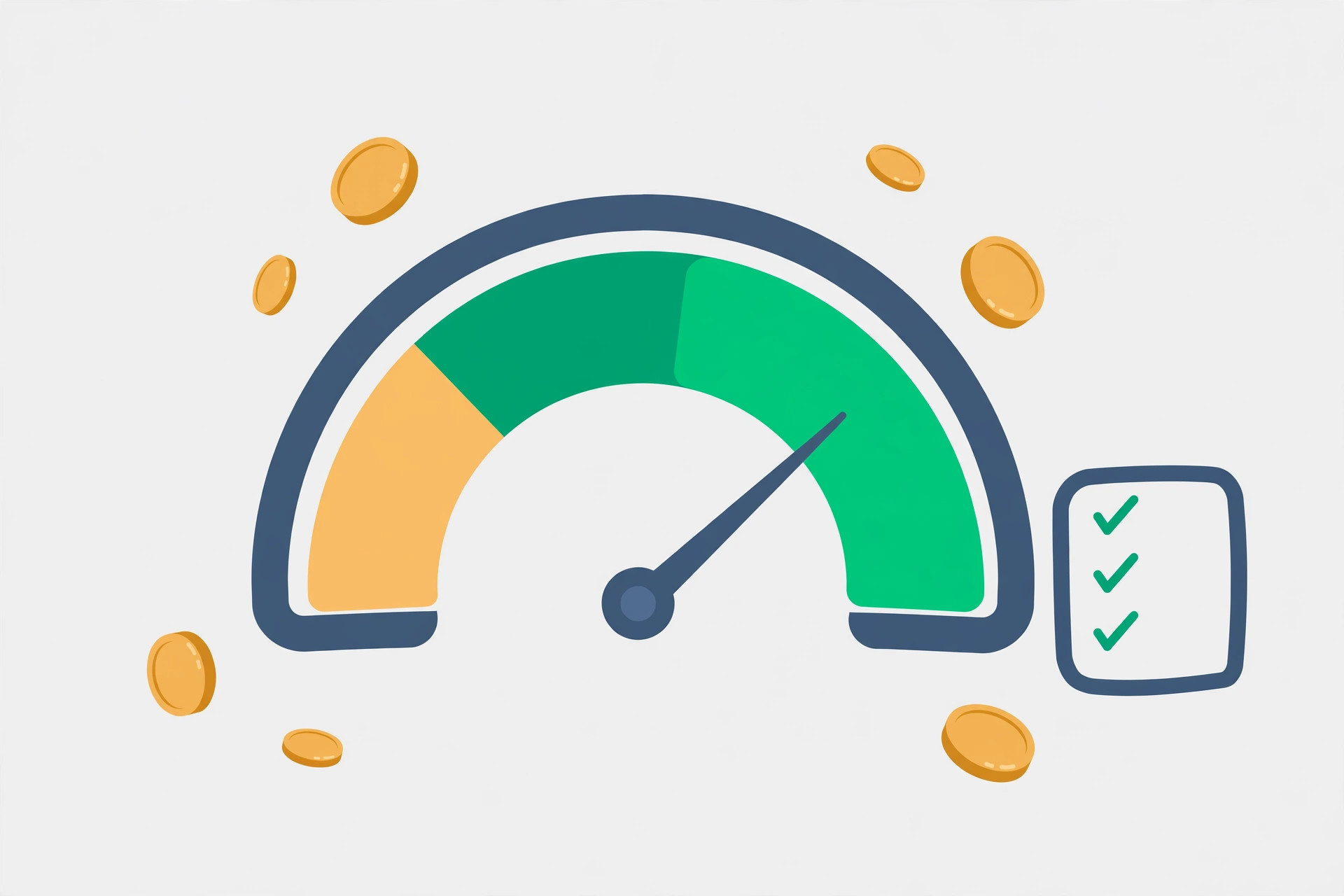
In 2023, my cousin applied for a home loan. Good salary, stable job, decent savings — and the bank offered him an interest rate nearly 1% higher than his colleague's. Same bank, same month. The difference? A three-digit number neither of them had thought about in years: his CIBIL score was 712, his colleague's was 791. Over a 20-year loan, that 1% gap would have cost him roughly ₹8–10 lakh in extra interest. He'd never missed an EMI in his life — but a credit card he'd forgotten about, maxed out years ago, was still dragging him down. This article is the guide I wish someone had handed him before he walked into that bank.
Your CIBIL score is a number between 300 and 900 that summarises your credit history — how reliably you repay what you borrow. Banks, NBFCs, and even some landlords and employers check it. A score of 750 or above is generally considered good and gets you the best loan rates; below 650, approvals get difficult and expensive. The score is computed by TransUnion CIBIL (one of India's four RBI-licensed credit bureaus) from data reported by your lenders every month. You don't control the formula directly — but you absolutely control the behaviours that feed it.
The 5 Things That Actually Decide Your Score
CIBIL doesn't publish its exact formula, but the broad weights are well understood. Think of your score as a report card with five subjects:
- Payment history (~35%) — the big one. Do you pay every EMI and credit card bill on or before the due date, every single month? One 90-day late payment can crater a good score. This is the single biggest lever you have.
- Credit utilisation (~30%). How much of your available credit are you using? Regularly spending ₹90,000 on a ₹1,00,000-limit card signals stress to the algorithm, even if you pay in full. Under 30% utilisation is the widely cited comfort zone. (Our credit card guide explains how utilisation and the minimum-due trap interact.)
- Length of credit history (~15%). Older accounts help. That first credit card from 2019 with a clean record is quietly boosting you — closing it can actually hurt.
- Credit mix (~10%). A healthy blend — say, a home loan plus a credit card — looks better than only unsecured credit. Don't take a loan just for "mix," though; the effect is modest.
- New credit inquiries (~10%). Every time you apply for a loan or card, the lender makes a "hard inquiry." A flurry of applications in a short period looks desperate. Space them out.
Notice what's missing: your salary, your savings, your investments. The score doesn't care how rich you are — it cares how reliable you are with borrowed money. A ₹40,000/month earner who pays everything on time can outscore a ₹4 lakh/month earner who pays late.
First: Check Your Score (It's Free, and It Doesn't Hurt)
Two myths to kill immediately. One: checking your own score lowers it. False — that's a "soft inquiry" and has zero effect. Two: you need to pay for it. Also false — CIBIL gives you one free report per year, and most banks and fintech apps now show your score free every month.
Pull your full report, not just the number. Look for: accounts you don't recognise (possible fraud or a reporting error), late payments you forgot about, and "settled" or "written off" statuses — those are red flags. If you find an error, file a dispute on CIBIL’s website; the bureau has about 30 days to verify with the lender. Genuine errors do get corrected — I've seen scores jump 50+ points from a single removed error.
The Realistic 6-Month Improvement Plan
There's no hack. Anyone selling "score boosting in 7 days" is selling nonsense. But six months of disciplined behaviour moves the needle for most people. Here's the plan:
Month 1–2: Stop the bleeding
Set up autopay for at least the minimum due on every card and loan — minimums won't build wealth, but they prevent the late-payment marks that destroy scores. (A simple budget makes on-time payments automatic.) If you have any overdue amounts, clear them now; newer delinquencies hurt more than old ones. And build an emergency buffer — it's what stops the next surprise bill from becoming a missed payment. List every active credit line so nothing slips through.
Month 2–4: Fix utilisation
Get every card's utilisation under 30% — ideally under 20%. Tactics that work: pay your card bill twice a month (once mid-cycle, once before the due date) so the reported balance stays low; request limit increases on cards you've held 6+ months; spread spending across cards instead of loading one. Don't close cards to "simplify" — you'll lose both the limit (raising utilisation) and the history length.
Month 3–6: Build the record
Keep the oldest card active with a small recurring charge (a streaming subscription on autopay is the classic trick). If you have no credit history at all — common for young earners — a secured credit card (issued against an FD of ₹10,000–25,000) is the standard on-ramp; use it lightly and pay in full for 6–12 months. Avoid applying for new credit during this window unless you genuinely need it.
Frequently Asked Questions
How long does it take to improve a CIBIL score?
It depends on what's dragging it down. Removing a reporting error can lift you within 30–60 days. Recovering from genuine late payments typically takes 6–12 months of clean behaviour. Serious defaults or settlements can take 2–3 years to fade. There are no overnight fixes — be suspicious of anyone promising one.
Will closing a credit card improve my score?
Usually the opposite. Closing a card reduces your total available credit (pushing utilisation up) and eventually shortens your average account age. Keep old, no-fee cards open with occasional small use — close only cards with high annual fees you genuinely don't want.
Does paying only the minimum due hurt my CIBIL score?
Paying the minimum on time protects your score (no late mark), but it doesn't help it much either — and the interest (often 3–4% per month) is brutal. For score purposes, what matters is on-time payment and low reported utilisation, not whether you revolve a balance.
I have no loans or cards. Do I even have a score?
You likely have a "NH" (No History) or -1 status — meaning no score yet. That's not bad, but it means lenders can't assess you. A secured credit card against a small FD is the usual first step to building a file.
Can a low score be the bank's mistake?
More often than people think. Wrongly reported late payments, loans that show "open" after closure, accounts belonging to someone with a similar name — all happen. That's why checking your full report (not just the number) once a year is non-negotiable. Disputes are free.
What Damages Scores That People Don't Expect
- Being a loan guarantor. If the borrower defaults, it hits your report too. Guaranteeing someone's loan is not a favour — it's a liability.
- "Settling" a debt. A "settled" status (paid less than owed via negotiation) is better than unpaid, but lenders read it as "didn't fully honour the debt." It lingers.
- Multiple loan applications in one month. Shopping for a home loan? Do it within a tight 2–3 week window — bureaus typically treat clustered mortgage/auto inquiries as rate-shopping, but scattered applications across months look risky.
- Ignoring a small old due. A ₹2,000 telecom or card due from 2021, forgotten and unpaid, can sit on your report for years. My cousin's story, basically.
- Maxing out cards even while paying in full. The reported balance is what counts, not your payment behaviour after the statement. High utilisation + full payment still reads as "stretched."
Score Ranges: Where Do You Stand?
| Score range | What it means | What to do |
|---|---|---|
| 750–900 | Excellent — best rates, easy approvals | Maintain: autopay, low utilisation, yearly check |
| 700–749 | Good — approved, maybe slightly higher rates | Push utilisation down, keep building history |
| 650–699 | Fair — approvals possible, rates noticeably higher | Fix late payments, reduce inquiries, 6-month plan |
| 550–649 | Poor — many rejections, high-cost lenders only | Clear overdues, consider secured card, avoid new applications |
| 300–549 | Very poor — deep repair needed | Settle defaults properly, rebuild slowly over 1–2 years |
Key Takeaways
- 750+ is the magic number for the best loan rates in India; payment history (~35%) and utilisation (~30%) dominate the score.
- Checking your own score is free and never lowers it — check the full report yearly for errors.
- Keep credit utilisation under 30% of your limit; pay mid-cycle if needed to keep reported balances low.
- Never close your oldest no-fee card — it anchors your credit history length.
- One late payment hurts more than almost anything else; autopay at least the minimum on everything.
- Real improvement takes 6–12 months of clean behaviour; anyone promising days is lying.
Final Thoughts
My cousin eventually got his score from 712 to 768. It took eleven months: he cleared the forgotten card due, set up autopay on everything, got a limit increase, and stopped applying for "pre-approved" cards every time a bank called. When he reapplied for the home loan, the rate dropped by 0.85% — saving him roughly ₹7 lakh over the loan's life. That's the thing about credit scores: nobody thinks about them until they cost real money. Spend an hour this weekend pulling your report. Future-you, signing a loan document, will be grateful.
Disclaimer: This guide is for education, not financial advice. Credit bureau policies and lender criteria change over time — verify current terms with the bureau or your lender before borrowing. CashCrafty and the author are not SEBI-registered investment advisers.
Continue Reading

A FICO score runs from 300 to 850 and shapes everything from your rent to your car insurance in the US. Here is how the five factors work, what counts as a good score, and how to build one from nothing.
In FY 2025-26, salaried income up to ~₹12.75 lakh can be fully tax-free under the new regime. Here's the complete comparison and a simple rule for choosing between the two.

NPS can beat PPF on returns but locks your money till 60 and taxes the annuity. PPF is tax-free and flexible but slower. Here's the full comparison — and when 'both' is the right answer.