
Table of Contents
No Taxation Without Representation: The Phrase That Changed the World
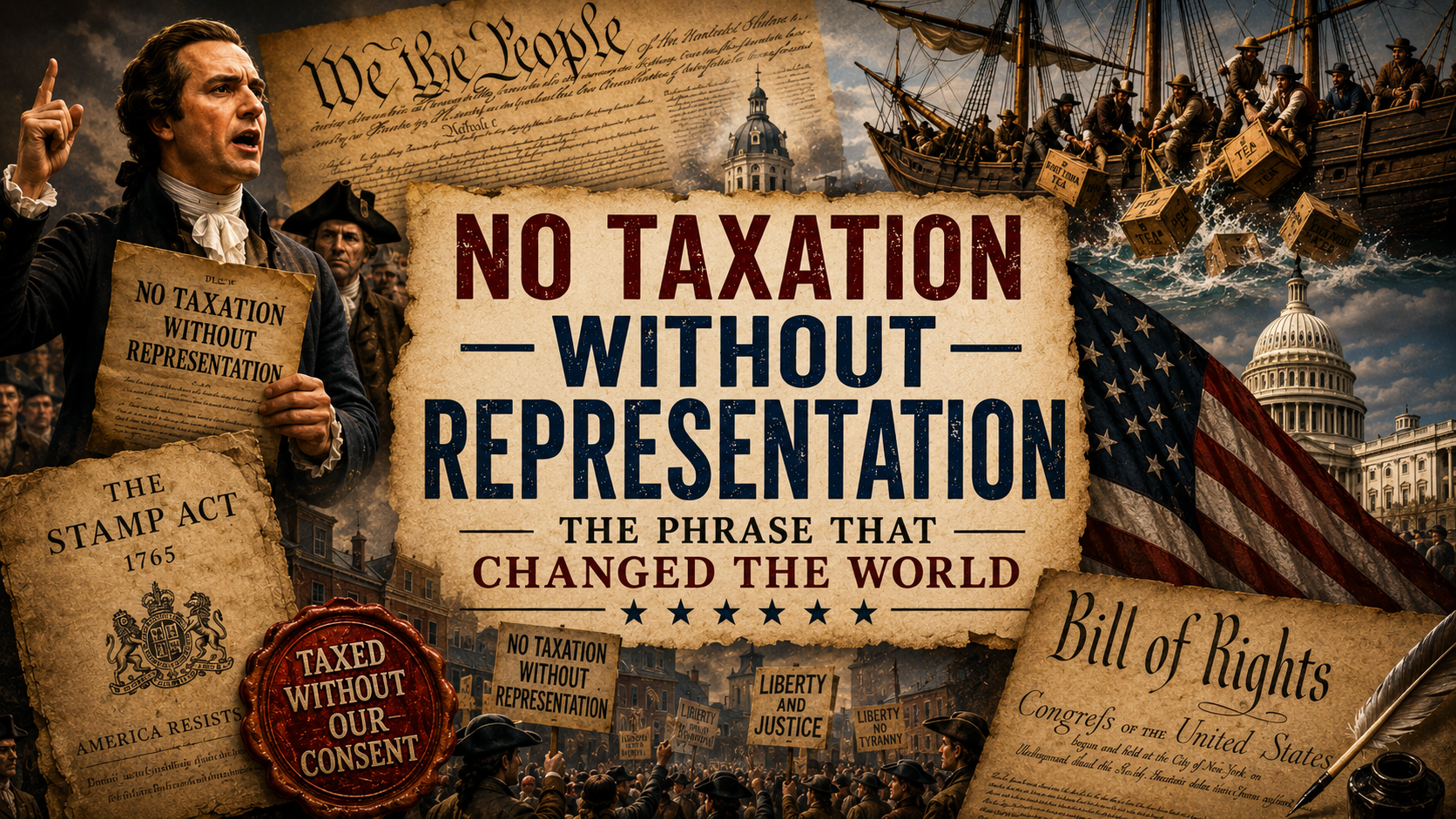
The phrase “no taxation without representation” is really important in history. It is short and easy to remember. This phrase has a lot of power. The phrase “no taxation without representation” helped start a revolution; it changed a continent. It created the basis for modern democracy. It is like a match that starts a fire. People who lived in colonial America were already upset. The phrase “no taxation without representation” gave them a voice to express their feelings. When you hear the phrase “no taxation without representation,” it probably means something to you, whether you learned it in school or heard it in an argument. The idea behind the phrase “no taxation without representation” is still important today. People do not like giving their money to a government they did not choose. This is not a problem from a time ago; the phrase “no taxation without representation” is something that people still care about today. The idea of the phrase “no taxation without representation” is still a deal because it is about something that matters to everyone. People want to have a say in how their money’s spent, and the phrase “no taxation without representation” is a simple way to say that. The phrase “no taxation without representation” is about having control over the money we give to the government.
What Does “No Taxation Without Representation” Actually Mean?
The idea of “no taxation without representation” is really straightforward. This saying originated during the American Revolution. The American colonists were unhappy with Great Britain. They felt it was unfair that they had to pay taxes but did not get to choose their leaders.
To understand what this means, you need to think about it. The saying is about an idea in a democracy. If a government takes money from people, then those people should have a say in who their leaders are and how their money is spent.
Imagine working all month. Then someone takes some of your money without asking you. You did not get to choose that person. You cannot tell them what to do. That is what it was like for the colonists when Great Britain was in charge. The American colonists were very frustrated. They had a reason to be frustrated with the American colonists’ situation.
The saying “no taxation without representation” was not something people shouted. It was a way of saying that it is not right for a government to take your money if you do not have any control over what the government does. The American colonists did not think it was fair that they had to pay taxes to a government that was away and did not care about the American colonists. The idea of “no taxation without representation” is still important today because it is about making sure that people have a say in how their money’s used and who is in charge of the government. The idea of “no taxation without representation” is all about giving people a voice. Wikipedia
Breaking Down the Core Idea
The Patriots felt they were treated unfairly by the British. They believed it was not fair that they paid taxes but did not get to decide how the money was spent. The Patriots wanted to have a say in the government because they were paying taxes.
They thought about it like this: when you pay taxes, you expect the government to do things for you. You pay taxes so that the government can help you and make decisions for you. If the government does not listen to you, then you should be able to get rid of that government.
It is just not fair if you pay taxes. You do not get a say in what the government does. The Patriots knew this. They said so. They may not have had all the words to explain how they felt, but they knew something was not right. The Patriots felt strongly about this. They made sure that everyone knew how they felt. The Patriots wanted to be treated and have a say in the government because they were paying taxes. They wanted to be able to vote for people who would make decisions for them. The Patriots were not happy about being treated by the British, and they wanted things to change. American Revolution
Virtual Representation vs. Actual Representation
The discussion about representation is really interesting. This was a deal a long time ago, and it affected people’s lives in a major way. The British thought that any member of parliament could represent everyone in the empire no matter where they came from. They did not think it was necessary to have someone from Virginia or Massachusetts specifically representing those places.
The Americans had their thoughts on this matter. They believed in having representatives from their own areas who would be seated and voting in London. The Americans thought this was the thing to do because if they were going to be taxed by Parliament, they should have a say in how the tax money was being spent. The Americans wanted representation, which means they wanted real legislators from their areas to be making decisions for them.
The Americans did not think the idea of representation made sense. They thought it was an excuse for the British to tax them without being accountable to the Americans. How could someone in London, who had never even visited Virginia and did not care about the people of Virginia and could not be voted out by the people of Virginia, really represent the people of Virginia? The colonists did not just disagree with this idea; they found it very insulting. The argument about representation versus being forced to do something was an issue during the time of the revolution. The Americans and the British had opinions on virtual representation and actual representation, and this was a major point of disagreement between the Americans and the British, and the Americans and the British had very different views on representation. U.S. History
The Historical Roots — Where Did It All Begin?
Pre-Revolutionary Seeds: Magna Carta and English Common Law
The idea that people should not be taxed if they do not have a say in the government did not just come from nowhere. This idea has a history that goes back to the English common law and how the government worked. A time ago, people began to think that the government should not take money from its citizens unless those citizens have a voice in the government. This idea started to take shape during the English Civil War when a man named John Hampden refused to pay a tax called ship money.
It is very important to remember that the people who lived in the colonies were not coming up with something. They were talking about rights that they already thought they had as citizens of the government. These rights went all the way back to the Magna Carta in 1215.
When the colonists complained about being taxed without having a say in the government, they were basically saying that the government was not following its rules. The colonists were talking about the government and the government’s rules. The government was breaking its rules, and that is what made the colonists’ argument so strong and hard for the British government to ignore. The colonists were standing up for their rights. The government was not listening to the colonists. Wikipedia
The French and Indian War and Britain’s Debt Crisis
The British government started putting taxes on the colonies in the 1760s. They had a lot of troubles before that. The French and Indian War from 1754 to 1763 had left the government with a big debt. So they decided to make the American colonies pay taxes to help pay off this debt. The British thought that having colonies was a way to make their country richer. They believed they had the right to tax the colonies whenever they wanted to.
This made sense to the British. The American colonies had been protected by the army during the war. So the British thought it was fair that the American colonies should help pay for the war.
The American colonists did not think this was fair. They had sent their men to fight in the war. They had also given resources to help the British. The American colonies already had their local governments that took care of taxes and other things.
The American colonists thought it was wrong for the British Parliament to take their money without asking them. They thought it was wrong that they did not get a say in how the money was spent. This seemed against the rights of the colonists as people under British rule. They did not think the British Parliament should be able to do this to the colonies. American Revolution
The Key Acts That Ignited the Fire
The Stamp Act of 1765 — A Turning Point
The French and Indian War really upset the colonies. Then the Stamp Act of 1765 came along. Made things even worse. The British Parliament created the Stamp Act of 1765, which was a law for the colonies. This law said people had to pay a tax when they bought paper and legal documents. The Stamp Act of 1765 also changed how trials worked and gave power to some courts.
A lot of people in America were very upset about the Stamp Act of 1765. They did not like the idea of paying taxes without being able to vote on the matter. People thought the Stamp Act of 1765 was a step towards the government controlling their lives much. Think about how the Stamp Act of 1765 affected people. Lawyers had to pay the tax when they made documents for their clients. Newspaper publishers had to pay the tax when they printed newspapers. Merchants had to pay the tax when they made business deals with people.
The Stamp Act of 1765 affected every person in the colonies, like teachers and businessmen. These were the people who could organize protests and fight against the Stamp Act of 1765. The colonial assemblies were very angry about the Stamp Act of 1765. They said the tax was unfair because they did not have any representatives in the British Parliament. The colonists were also upset that they could not have a trial by jury, which is where a group of ordinary people decide if someone is guilty or not. They thought the Stamp Act of 1765 was taking away their rights as citizens of the colonies.
The British Parliament eventually listened to the complaints about the Stamp Act of 1765. They got rid of the Stamp Act of 1765 in March 1766. The way the American colonies reacted to the Stamp Act of 1765 paved the way for the American colonies to want to be independent from Britain. The Stamp Act of 1765 was important because it made the American colonies realize that they wanted to be free from rule and have control over their own lives. LOCLOC
The Townshend Acts and Escalating Tensions
The British Parliament still had work to do even after they did away with the Stamp Act. In 1767 they created the Townshend Acts, which required people to pay for items like glass and paper and paint and tea that came from countries. The American colonists began using a phrase in the 1760s because they were unhappy about the taxes the British were imposing on them for things they purchased. This occurred after the British implemented the Stamp Act, then abolished it a year later and subsequently created the Townshend Acts.
The British believed they were being clever by taxing items that came from countries instead of taxing people directly, but the colonists were not fooled. A tax is still a tax whether you pay it when you buy something or when you fill out paperwork. The main idea remained the same: the British were taking money from the colonies, and the people who lived in the American colonies did not have a say in it.
Every time the British imposed a tax without consulting the colonists, it made the American colonists a little angrier, and eventually something was bound to happen because of it. The Townshend Acts and the Stamp Act were both examples of taxation without representation, which was a problem for the American colonists. The American colonists did not like that the British were making them pay taxes without giving them any power to make decisions about the colonies. The American colonists were upset that the British Parliament was taking their money without asking them what they thought about the Townshend Acts and the Stamp Act. Study.com
The Voices Behind the Slogan
James Otis Jr. — The Man Who Made It Famous
The cause of representation had a communicator in James Otis Jr. He was a lawyer and a Patriot politician from Massachusetts. James Otis Jr. is closely linked with a slogan.
He fought against taxation without representation. James Otis Jr. wrote that taxing people who are not represented takes away their rights as free people. He said this in 1764. If this continued, it would take away all their rights.
James Otis Jr. was a lawyer. He knew the colonial cause was not about money. It was about how citizens and their government interact. James Otis Jr. Explained the principle of the movement in a way. This gave the movement a foundation.
People think James Otis Jr. Came up with the phrase around 1761. American colonists were upset about being taxed by the British Parliament. They did not elect any representatives to this parliament. The phrase became a slogan against the British before the American Revolution. The full phrase is “Taxation without representation is tyranny.” James Otis Jr. And the colonial representation cause used this phrase to make its point. American RevolutionDictionary.com
The Sons of Liberty and Colonial Protest Movements
The Sons of Liberty were important in history because they did something about their ideas. The Sons of Liberty in Boston had a saying when they were protesting the taxation policy. They told people to not buy things they did not need so they could hurt the government by taking away their money.
The Sons of Liberty were good at getting people to listen and come together to fight for what they believed in. They had meetings. Made papers that scared the tax collectors. They kept bothering the people in charge in the colonies and in the government in England. The Sons of Liberty knew that if you keep trying to change something and you have a reason, you can even change things that seem too hard to change.
The phrase “no taxation without representation” was a deal. It brought all the people in the colonies together to fight for the same thing. The Sons of Liberty used this phrase to make people mad at the government and its rules. The Sons of Liberty and their phrase “no taxation, without representation” are still remembered today because they started something. The Sons of Liberty helped people come together and fight for what they wanted. American Revolution
The Boston Tea Party — When Words Became Action
By 1773 the people who lived in the colonies were very tired of the way things were. The Boston Tea Party was one of the protests in the history of America. It was a time when the people who lived in the colonies decided to take a stand against the government. The people who lived in the colonies did not think it was fair that they had to pay taxes without having any say in how the British government was run. The Boston Tea Party was a part of what brought the colonies to fight against the British.
In 1773 a group of people got together. Did something very bold. They boarded three ships in Boston Harbor. Threw a lot of tea into the water. This was the people who lived in the colonies’ way of protesting against the taxes that the British government was making them pay.
On the night of December 16, 1773, some members of the Sons of Liberty dressed up as Native Americans. Went onto the British ships. They threw 342 chests of tea into the harbor. If we were to buy that tea today, it would cost about $1.7 million.
The Boston Tea Party was a thing to do, and it showed that the people who lived in the colonies were not afraid to stand up against the British government. The British government did not like what the people who lived in the colonies did, so they made some laws that were very harsh. These laws were called the Acts.
Instead of making the people who lived in the colonies less likely to protest the Acts, they actually made them more united and more determined to fight for their freedom. The Boston Tea Party showed that the idea of “no taxation without representation” was not something the people who lived in the colonies said. The Boston Tea Party was something the people who lived in the colonies were willing to fight for.
The Boston Tea Party was a deal because it was a time when the people who lived in the colonies decided to take action against the British government, and the Boston Tea Party was an important part of American history. Fiveable
How the Phrase Shaped the U.S. Constitution
From Slogan to Founding Principle
The journey from a slogan to a principle is really something special in the history of politics. The ideas in the phrase “no taxation without representation” did not go away after America became independent. They became a part of the American nation. The idea that people should have a say in how their money’s spent really worked, and it helped when the United States Constitution was written. This United States Constitution made a government that’s responsible to the people through the people they elect.
The first part of the United States Constitution, which is about Congress, was written with the memory of taxes being imposed without the people having a say. The people who wrote the United States Constitution wanted to make sure that elected representatives who are responsible to the people can decide how taxes are spent. These people had seen what happens when taxes are imposed without the people having a say. They did not want that to happen again. The phrase “no taxation without representation” was very important to them. They made sure the phrase “no taxation, without representation” was part of the United States Constitution. Fiveable
The Bill of Rights and Representation in Taxation
The Bill of Rights, which was ratified in 1791, made the principles of the Constitution even stronger. The original Constitution also had some rules that showed what was learned from the colonial era. For example, the rule that all revenue bills have to start in the House of Representatives, the group that is most accountable to the people, was a result of the problems people had during the colonial era.
The people who wrote the Constitution understood that it is very important for citizens to have a say in how the money of the citizens is spent because this is what makes a government fair. The idea of the Bill of Rights and the Constitution is still very important in democratic systems today because it helps make sure the government is accountable and transparent.
The idea of “No Taxation without Representation” set a standard that citizens should be involved in the government through the people they elect to be in the government. The idea of no taxation without representation is still very important in democratic systems today because it helps make sure the government is accountable and transparent.
When you vote for someone to be in Congress, you are using the right that the colonists fought and died for: the right to vote for someone to be in Congress. The Bill of Rights and the Constitution are still helping to shape the country today. The principle of no taxation without representation is still a part of the Bill of Rights and the Constitution that are still helping to shape the country today. Fiveable
“No Taxation Without Representation” in the Modern Era
Washington D.C. and the Ongoing Battle for Representation
The United States is a country that was formed because people did not want to pay taxes if they had no say in how the government worked. Many Americans still do not have a say in the government.
People who live in Washington D.C. Pay taxes like everyone else, but they do not have anyone to vote for them in the Senate. They have someone who can speak for them in the House. This person cannot vote.
The license plates in Washington D.C. Say “Taxation Without Representation,” and that’s on purpose. It is a reminder that the main reason for the American Revolution is still a problem for the people who live in Washington D.C.
This is a deal because it affects more than 700,000 Americans, which is about the same number of people who live in Wyoming or Vermont. The fact that Washington D.C. Residents do not have representation; it is a major issue. Washington D.C. residents are still dealing with the problem that the United States was trying to solve when it was first started. The United States was trying to fix this problem. Washington D.C. residents are still facing it today.
The Tea Party Movement of 2009
In the year 2009, the phrase “taxation without representation” was used again in the Tea Party protests. The people who were protesting were really upset about the government spending money and raising taxes. They were especially worried about the money decisions the United States government was making.
The Tea Party movement used pictures and words from the American Revolution on purpose to show how angry they were about the government spending money to bail out companies and taxing people without being accountable to citizens like the Tea Party movement did. The Tea Party movement was upset about the government taxing people without listening to the Tea Party movement.
You might disagree with what the Tea Party movement wants to do. The Tea Party movement shows how important the idea of no taxation without representation is to Americans. The phrase “taxation without representation” is not just for the Tea Party movement; it is for everyone who thinks the United States government is doing things it should not do. The phrase “taxation without representation” is a deal to Americans, and it always will be. Wikipedia
Global Echoes of the Slogan
The phrase has an effect on people in many places outside of America. This idea keeps people going who want to have rights and a say in how things are done everywhere. It really matters when it comes to what people think about politics today.
People who are fighting for independence in Africa and Asia and even people who talk about taxing people who live in countries and digital nomads—they all think about this phrase when they feel they are being asked to pay money without having any say in how things are run.
This connection is still very important today even though a lot of things have changed. Nowadays it is not about people saying they should have a say because they work. It is about governments saying they want people to pay them money if they want to be citizens or vote.
The conversation is more complicated now. The problem of paying taxes and having a say is still a deal. The phrase is still very much alive, and it is still about taxation and the right to have a say in how things are run. The phrase is really important because it is about people wanting to have a say in how things are done, and that is what the phrase is all about, the phrase and its meaning. FiveableTaylor & Francis Online
Why This Principle Still Matters Today
You might wonder why the phrase “no taxation without representation” is still worth thinking about today. This phrase was first used a time ago in 18th-century colonial America. The reason it is still important is that the idea behind this phrase is just as important now as it was then. The idea of “no taxation without representation” is that people should have a say in how their money’s being spent by the government.
We should take a look at our governments and see if they are really doing a good job of representing the people. There are a lot of arguments going on now about taxes and policies. For example, people are talking about who should pay taxes and who should get the benefits. They are also talking about how money can influence politics and how some people are not allowed to vote. All of these arguments are about whether people have a say in how the country’s run. The phrase “no taxation without representation” is still relevant because it reminds us that people should have a say in how they’re governed.
When the government passes a law that makes one group of people pay taxes and another group does not have to pay, that is not fair. This is similar to what happened a time ago in colonial America. When a lot of people feel like their opinions do not matter, that is a problem. It means that the government is not doing a job of representing the people. The idea of representation is still something that we need to work on. We need to make sure that people have a say in how their money’s being spent.
The phrase “no taxation without representation” is a reminder that people should have a say in how they’re governed. We should think about this idea when we look at our government and see if it is doing a job of representing the people. The idea of representation is not something from the past; it is still important today. We need to think about whether our government’s really listening to us and representing our interests.
The phrase “no taxation without representation” is important because it helps us remember that governance is about right and wrong. Taxation is not about money; it is about how citizens and their state interact with each other. When people are taxed without having a say, it is not fair. The government does not listen to them because nobody speaks up for them. They still have to pay taxes, which’s like being forced to do something without having any say in the matter. This is like a judge only listening to one person in a dispute and making a decision based on that. This kind of one-sided situation is always unfair no matter what time period we are talking about or what specific rules are in place.
The people who lived in the colonies did not just want to pay less in taxes; they wanted to have a voice in how things were run. They wanted to be able to participate in the decisions that affected their lives. This desire to be part of the decision-making process is something that people have always wanted. It is a part of being treated with respect in the world of politics. Taxation is a part of this. The idea of “no taxation without representation” is still important today because taxation and representation go hand in hand. When we talk about taxation, we are talking about the relationship between citizens and their state. Taxation is not a financial thing; it is about how people are treated by their government. The phrase “no taxation without representation” reminds us that people should have a say in how their money’s being spent and how they are governed. Study.com
Conclusion
The phrase “No taxation without representation” is more than something we study in history class. It is like a mirror that every country with a government can look into to see if they are really doing what they claim to be doing. The idea of “no taxation without representation” started a time ago in America when it was still a colony, and “no taxation without representation” played a big role in the revolution. “No taxation without representation” is part of the United States Constitution. The idea of “no taxation without representation” has been around for a long time, and “no taxation without representation” is still important today. We can see “No taxation without representation” in things like the Boston Tea Party and on the license plates in Washington D.C. We can also see “no taxation without representation” in the way people talked about the Stamp Act a time ago and in the rallies of the modern Tea Party. The reason we keep hearing the phrase “No taxation without representation” is because people always want their governments to listen to them, especially when it comes to money. People want to know how their money is being collected and spent. This is not an idea; “no taxation without representation” is a part of being able to govern ourselves. ” “No taxation without representation” is just as important now as it was back in 1765. People will always want “No taxation without representation” because they want to make sure their government is accountable to them, and that is what “No taxation without representation” is about.
Frequently Asked Questions (FAQs)
1. Who first said “no taxation without representation”?
The phrase is usually linked to James Otis Jr., a lawyer from Massachusetts and a politician who supported the Patriots back in 1761. James Otis Jr. said it in a strong way when he was against the British rules on taxes. He said that “taxation without representation is tyranny,” and people remembered it. A lot of people who lived in the colonies felt the same way about James Otis Jr. And the idea was written about in different ways by people who wrote about politics at that time. James Otis Jr. And the colonists did not like the rules on taxes, and James Otis Jr. Was a key person in saying that.
2. What specific taxes prompted the “no taxation without representation” protests?
The main things that caused trouble were the Stamp Act of 1765 and the Townshend Acts of 1767. The Stamp Act of 1765 made people pay taxes on things, like paper and legal documents. The Townshend Acts of 1767 made people pay taxes on things that were imported like glass and paper and tea.
The British Parliament made these laws. The American colonists did not have anyone to represent them in the British Parliament. So the Stamp Act of 1765 and the Townshend Acts of 1767 were reasons why the American colonists were upset and started protesting.
3. Is “no taxation without representation” still relevant today?
Absolutely. The idea is still important today in areas. People living in Washington D.C. Pay taxes but do not have full voting rights in Congress. This idea has also been used in talks about tax policy taxing big companies online and the rights of people who pay taxes but are not citizens in different countries, around the world.
4. What was “virtual representation,” and why did colonists reject it?
The British said that the people in Parliament spoke for everyone in the British Empire, including the people who lived in the colonies. The people who lived in the colonies did not agree with this idea. They thought that the only way someone could really speak for them was if they had chosen that person themselves. The colonists wanted to be able to choose their representatives and have them answer to them, which they called actual representation. They did not think it was fair that the British could tax them without being chosen by them, and they did not think the idea of representation was a good reason for taxing them without their consent. The British idea of representation seemed empty to the colonists because it meant they had no say in how they were being taxed.
5. How did “no taxation without representation” influence the U.S. Constitution?
The principle had an effect on the Constitution. It says that any bill about money has to start in the House of Representatives. This is the group of people that is elected directly by the people. The principle also helped shape the system of government where people elect representatives. This makes sure that only the people we elect can make decisions about taxes. The principle is a part of how America is governed. It is not just something people say; it is actually how the government works. The principle makes sure that the people who make decisions about taxes are answerable to the people who pay those taxes.